


Collodion
Hand-poured emulsions on glass and metal plates.
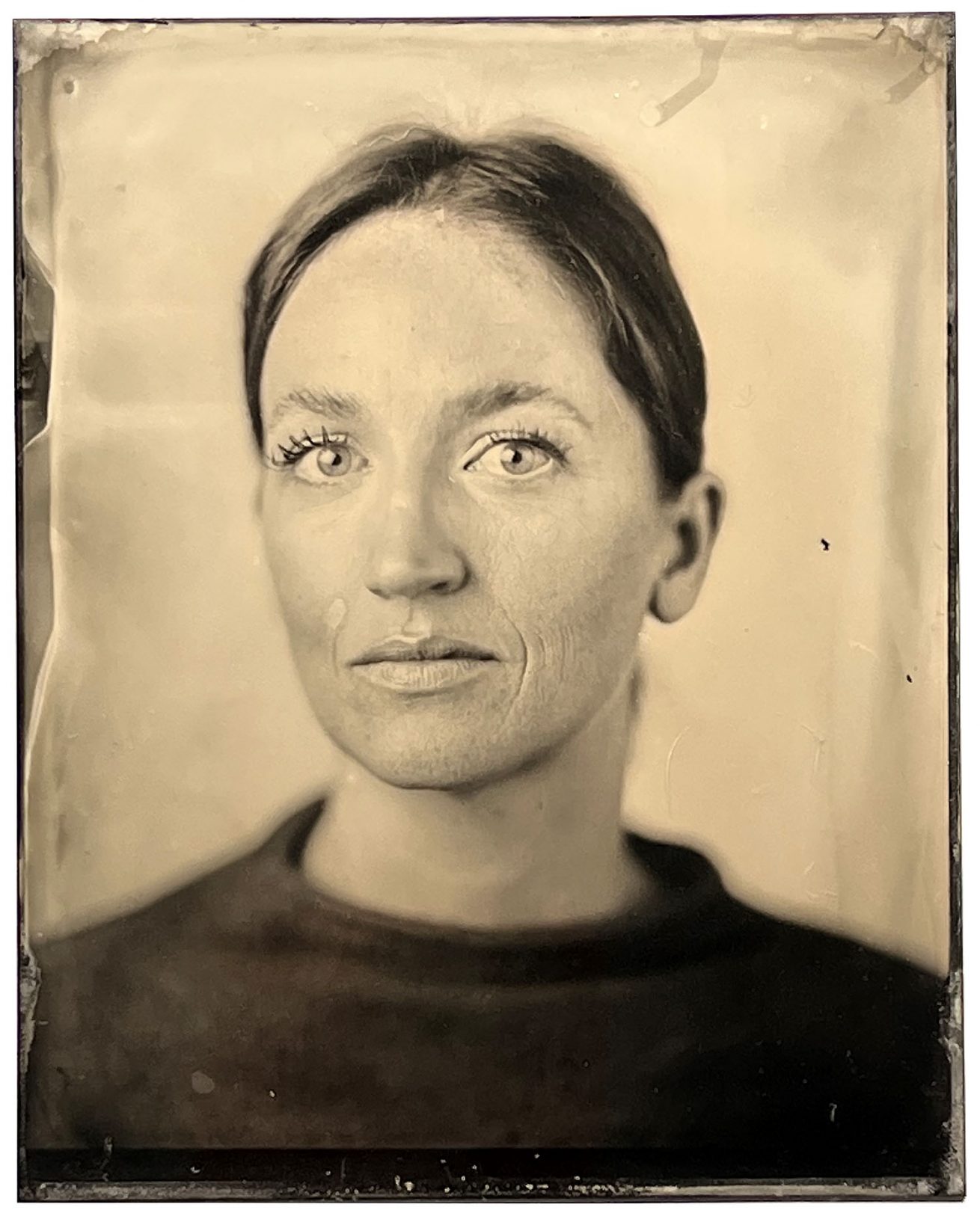
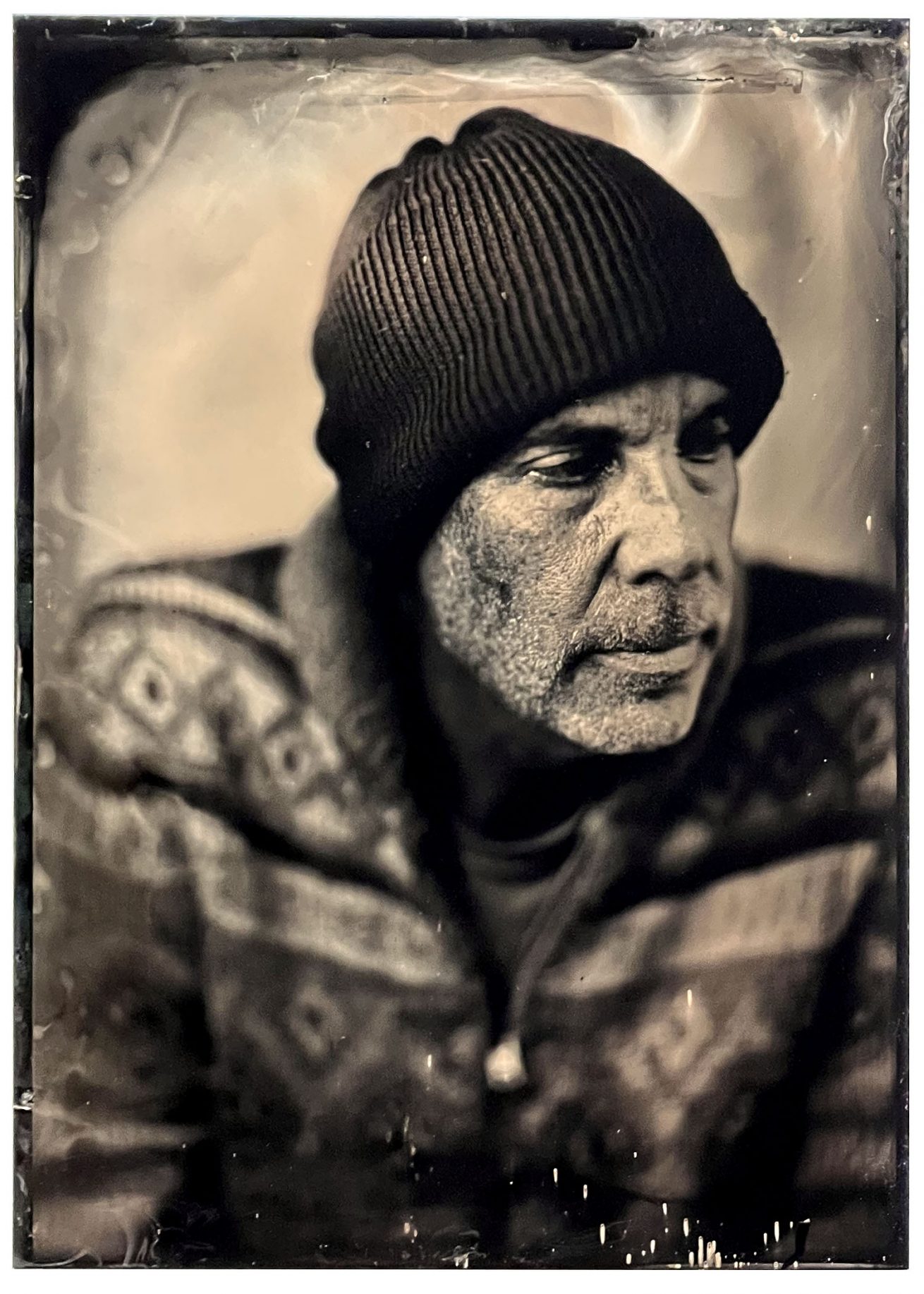
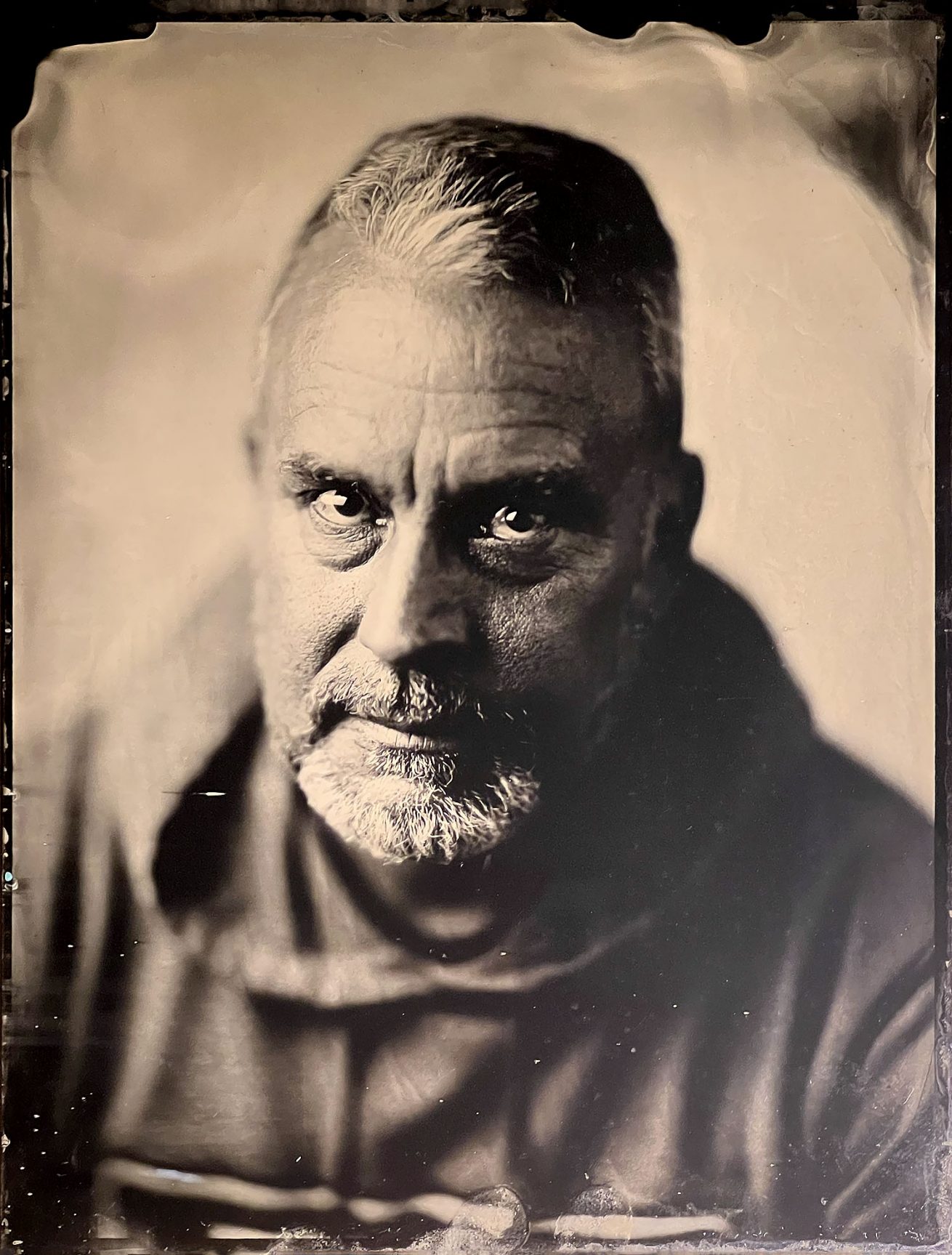
My Collodion series joins with the work of many contemporary photographers. To be sure, there is nothing new about wet plate collodion. This is precisely the point of working in the process.
Collodion provides the opportunity for the photographer to engage intimately with the creation of the photograph. Through the alchemic mixing of ether, alcohol, gun cotton, bromides, and iodides to create the collodion emulsion; the pouring and sensitizing of the plate in a silver nitrate bath, and on to the immediate exposure of the plate in a large-format camera, the photographer’s intention is focused on the creation a one-of-a-kind photographic object.
I embrace the idea that collodion metaphorically binds the subject to the physicality of the photograph. Speaking literally, the collodion image exists on the very plate that was in the camera when the subject sat before the lens—whether yesterday or 150 years ago. In this manner, my Collodion series aligns with my other series in exploring the photograph as an expression of authentic experience versus facsimile experience.
In a culture that is dominated by photographs produced and shared instantaneously on highly engineered devices, the imperfections of collodion—the drips, streaks, and fingerprints—layer the photographer’s presence onto the photographic image. Likewise, the limited palette of collodion—a function of its greater sensitivity to invisible ultraviolet light than to visible light—focuses our consideration on the sitter’s eyes and subtle nuances of expression.
Here too, through collodion, these imperfections and limitations force our intellectual minds to give up and walk away, opening up our emotional minds to see as we might not otherwise see.