


ELECTRIC MASKS
Constructed Objects, Studio Photography
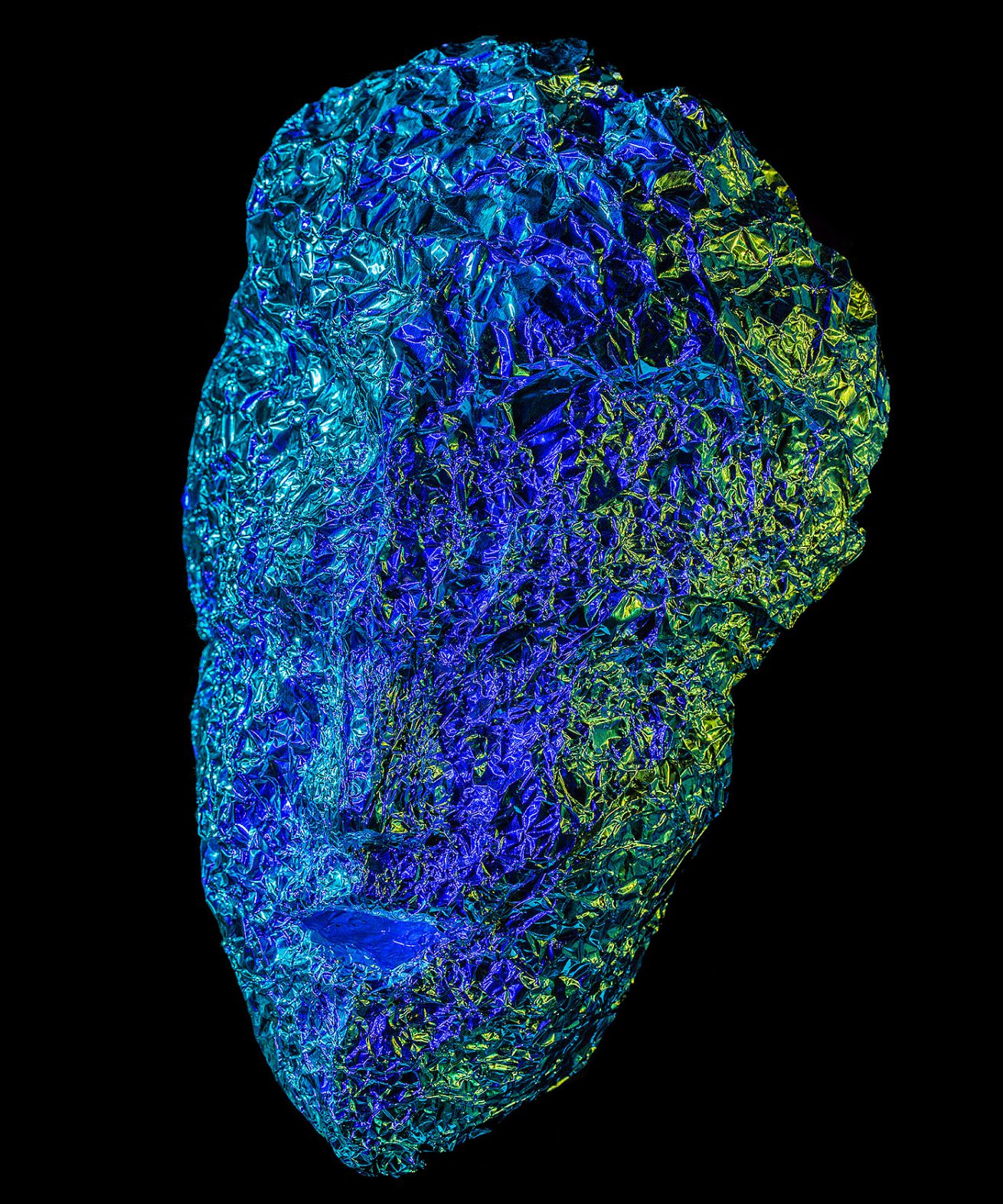
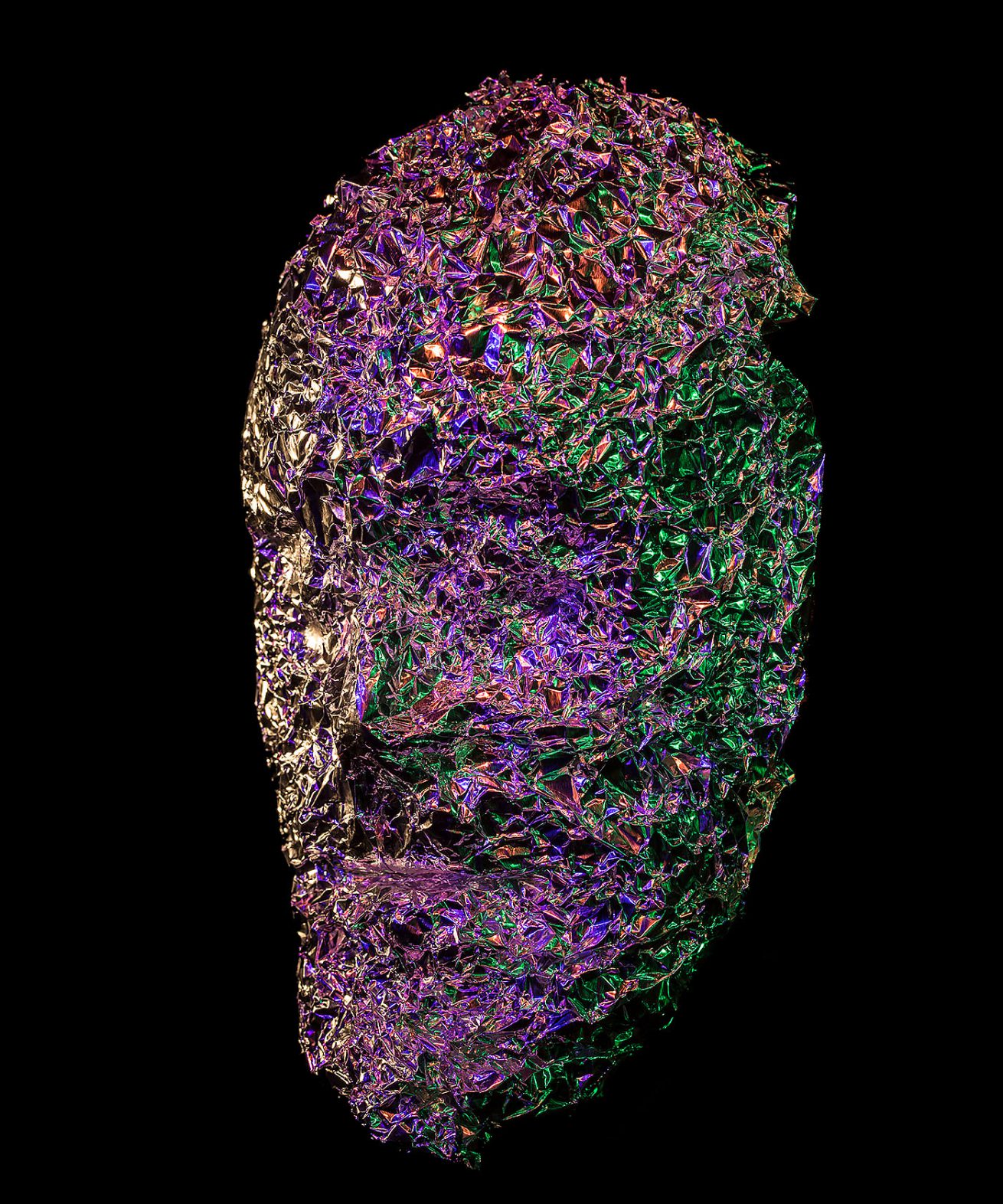
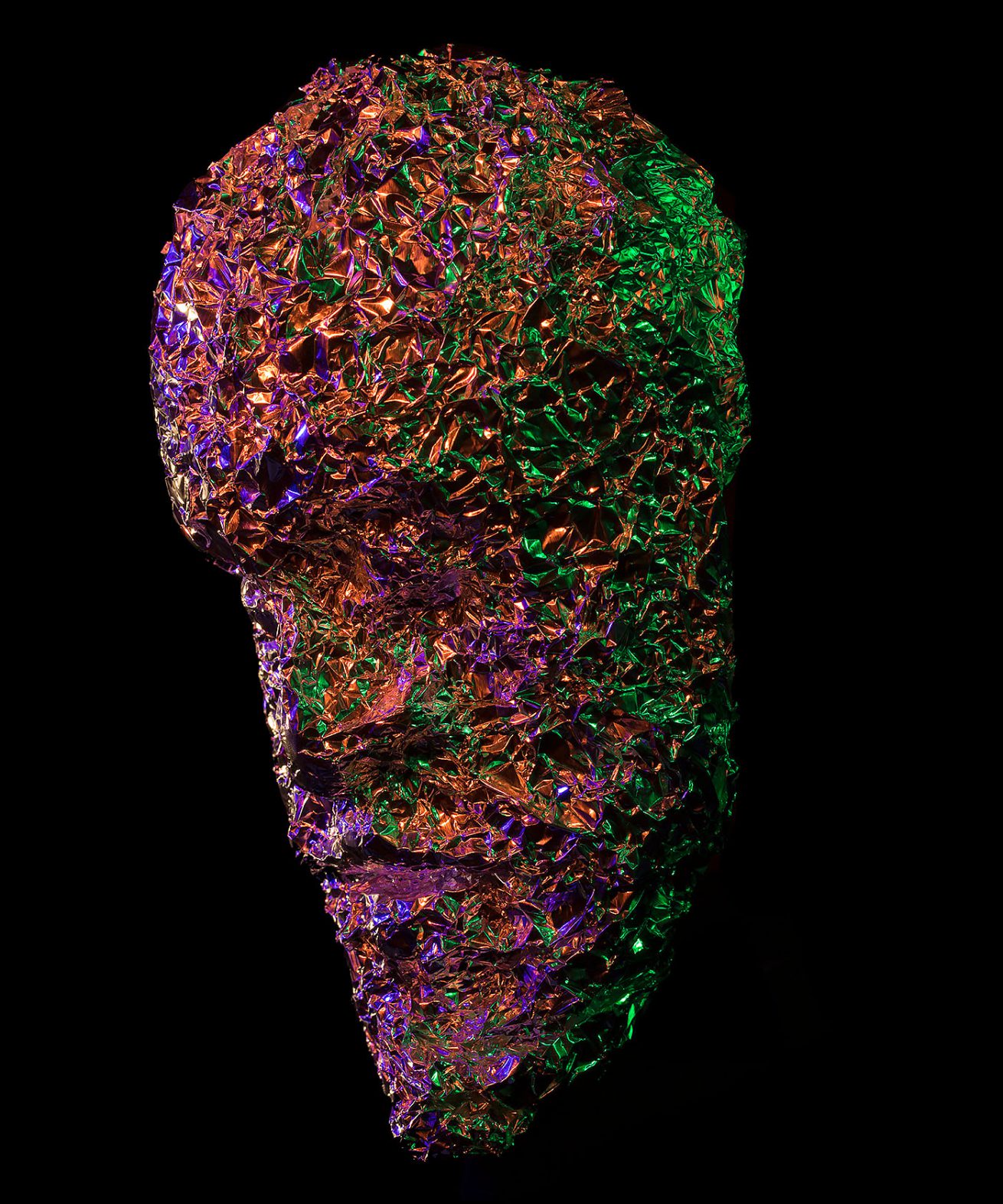
My Electric Masks consider questions of identity, artifice, and perception through images that destabilize first impressions. While difficult to fully read on screen, the work undergoes a perceptual shift when encountered in person as large-scale prints. As viewers approach, assumptions about how the images were made begin to unravel, replaced by a slower recognition rooted in material detail.
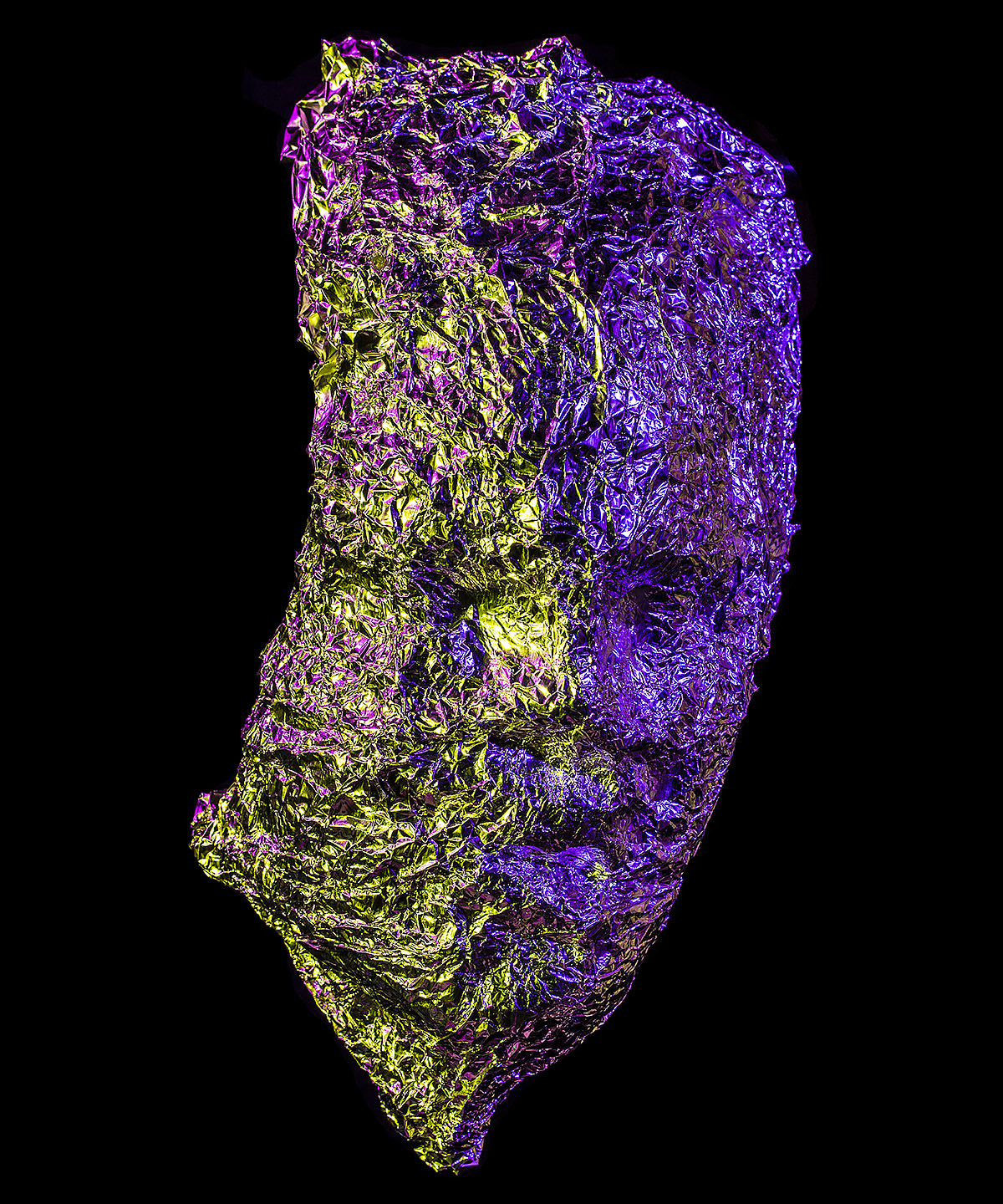
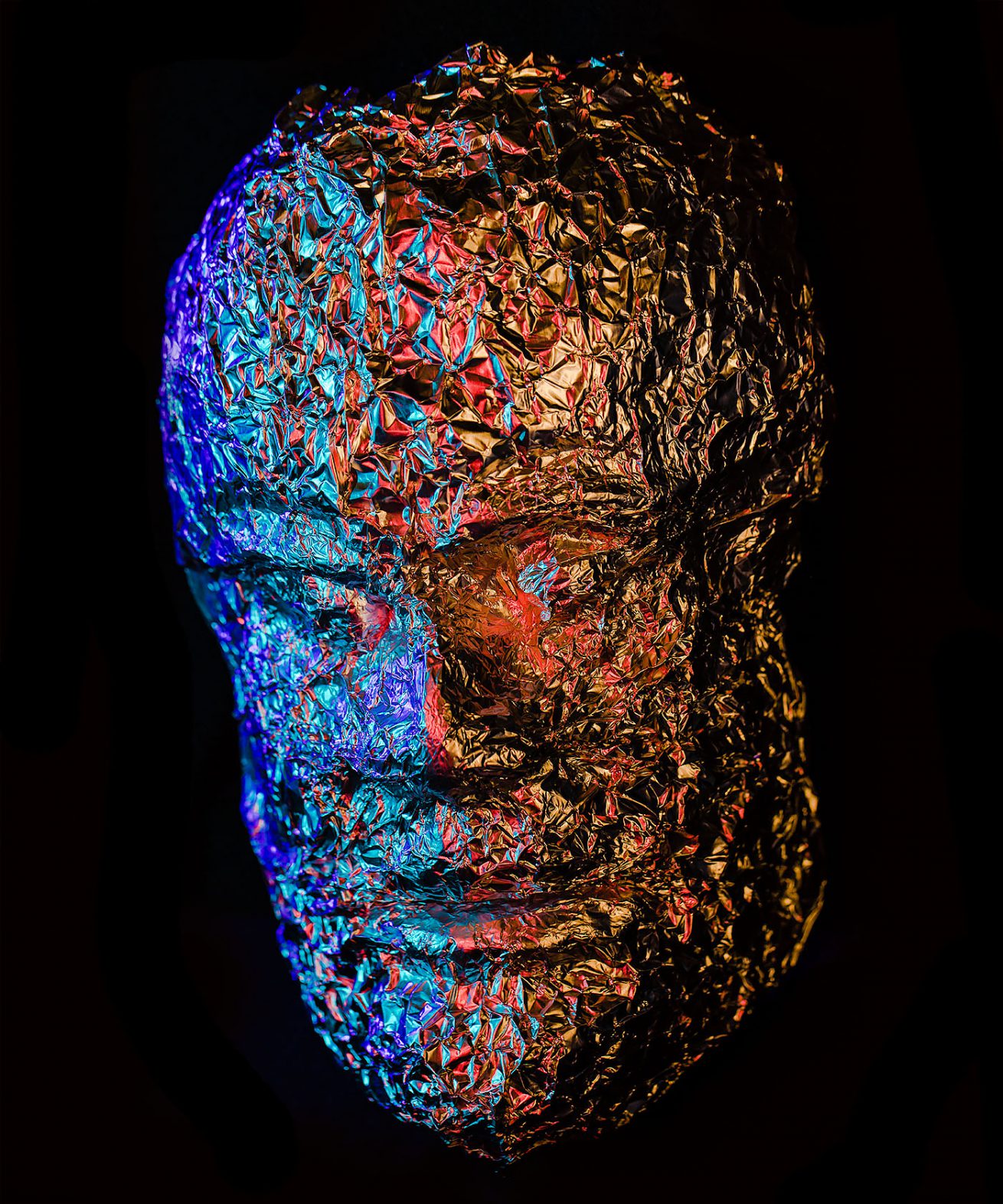
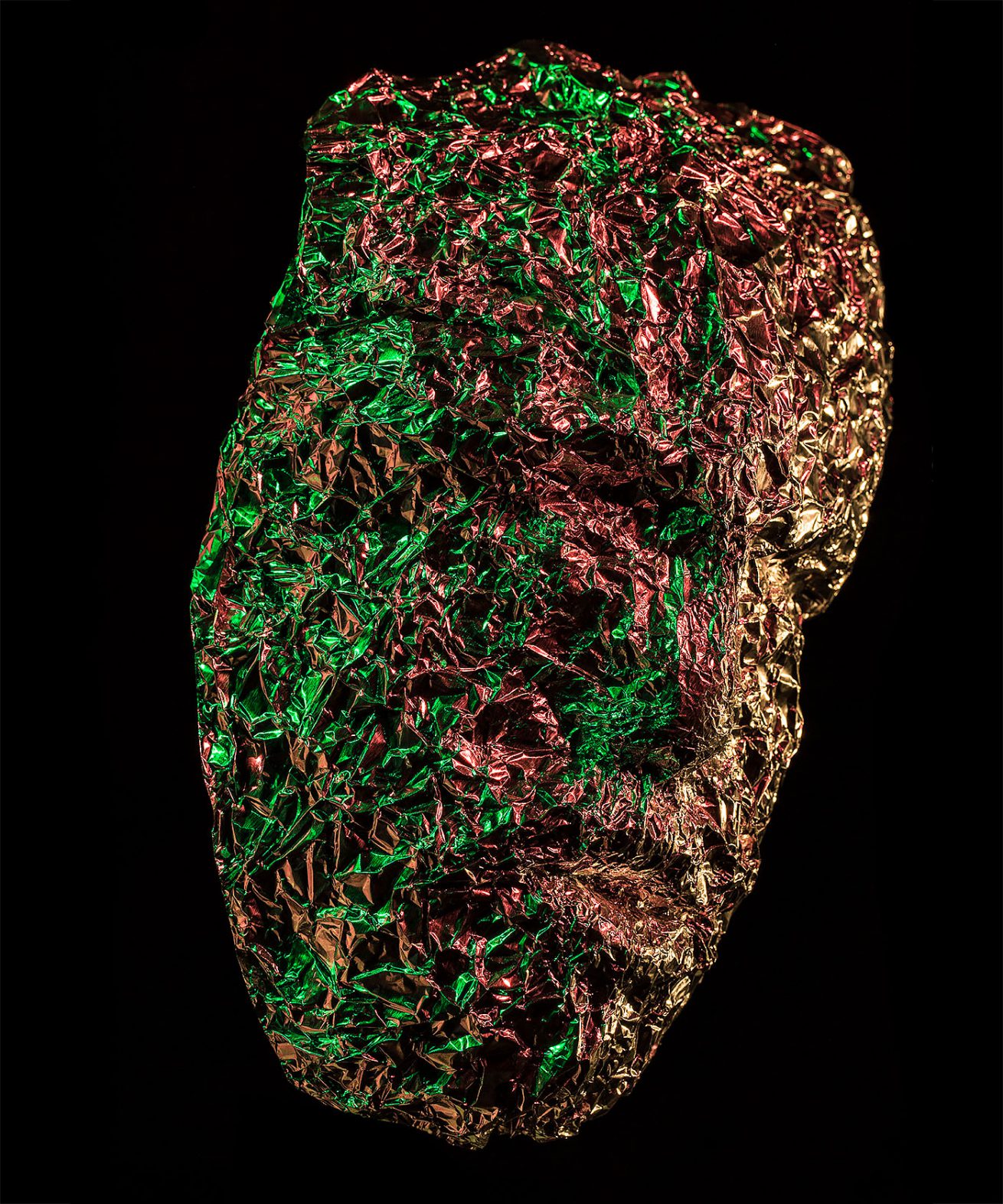
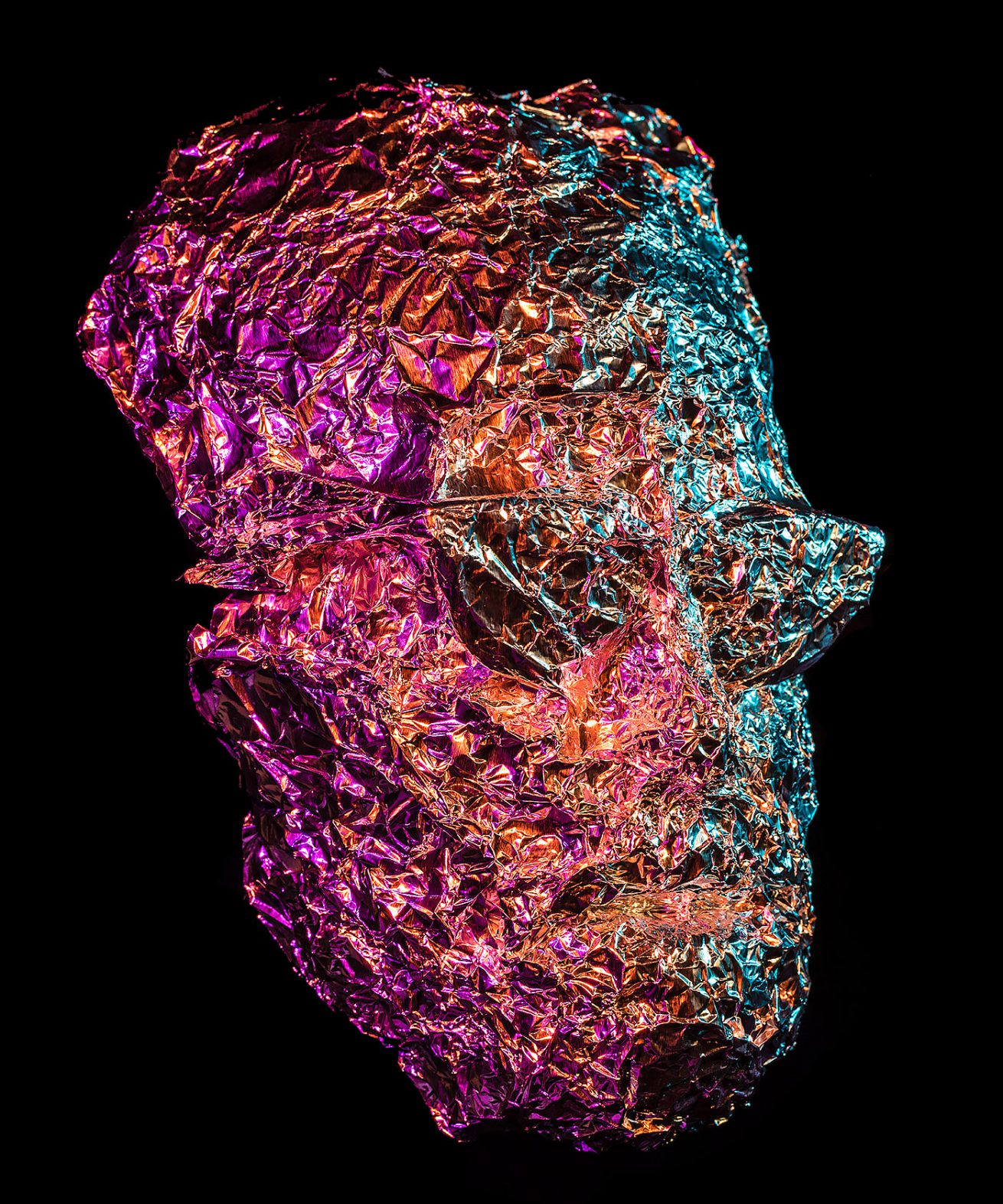
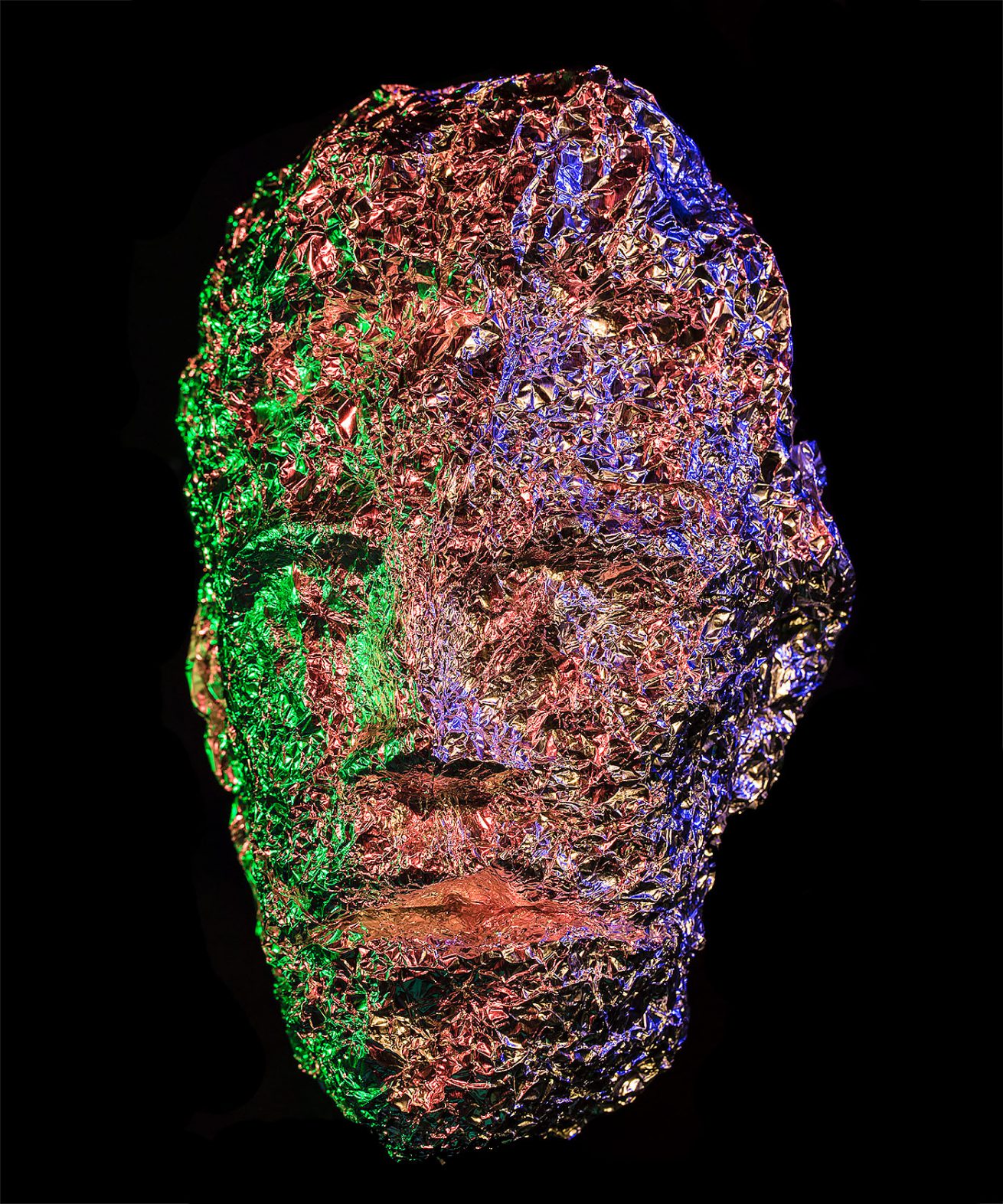
At a distance, the Electric Masks are often mistaken for computer-generated renderings. Their faceted surfaces and saturated colors recall fractal imagery or wire-frame models, encouraging a reading shaped by digital aesthetics. This expectation gives way through proximity. As the viewer moves closer, thousands of fine scratches become visible within the colored planes, revealing that the images are photographs of human faces embossed in crumpled aluminum foil and illuminated with opposing colors of light.
This shift—from virtual to physical, from synthetic to handmade—anchors the work in photography’s capacity to misdirect and then reorient perception. The foil surface functions simultaneously as subject and mediator, fragmenting the face while recording the directional behavior of light. What appears seamless at first glance is revealed to be fragile, reflective, and densely worked, asking viewers to reconsider the relationship between appearance and construction.
Beyond their overt engagement with masking and identity, the Electric Masks offer a quieter metaphor. The visibility of each facial detail is shaped by the direction it faces—toward or away from light—suggesting how identity itself is conditioned by orientation, context, and illumination. In this way, the work aligns with my broader practice: an interest in images that reward sustained looking, foreground material presence, and reveal meaning through physical encounter rather than immediate legibility.